

Fuel Quality Control is the process of verifying that fuel is clean, compliant, traceable and suitable for operational use before it is accepted, stored or issued. In Defence Logistics Support, fuel risk is not limited to availability. A delivery may arrive on time and in the required quantity, but still create operational risk if the fuel is contaminated, poorly documented, incorrectly specified or unsupported by reliable acceptance records.
For procurement teams, logistics planners and operational commanders, Fuel Quality Control is therefore a core part of Fuel Supply Logistics. It protects equipment, supports safety, reduces disputed deliveries and gives receiving teams a clear basis for accepting or rejecting fuel before it enters operational systems.
This is especially important across maritime, aviation and ground environments, where fuel may move through multiple suppliers, ports, airfields, storage tanks, transport assets and handover points before it reaches the end user. Effective Fuel Supply depends not only on sourcing fuel, but on controlling its condition, documentation and acceptance throughout the delivery chain.
What is Fuel Quality Control in Defence Logistics?
Fuel Quality Control in defence logistics refers to the inspection, sampling, testing, documentation and acceptance procedures used to confirm that fuel meets required specifications before operational use.
It includes checks on fuel grade, cleanliness, contamination, water content, sediment, supplier documentation, batch traceability and delivery records. It also includes the procedures used when fuel does not meet the required standard.
Official defence fuel systems treat quality as a governed discipline. DLA Energy’s Quality and Technical Support function manages Quality Assurance and Quality Surveillance programmes, supports energy product procurement, leads investigations and handles disposition requests for off-specification products.
In practice, this means fuel should not be treated as a simple commodity. It is an operational input that must be controlled before it is accepted into vessels, aircraft, vehicles, generators, storage tanks or mission-support infrastructure.
Why Fuel Quality Control Matters Before Fuel Acceptance
Fuel that is available is not automatically suitable. Before acceptance, receiving teams need confidence that the fuel is correct, clean and supported by adequate documentation.
Poor Fuel Quality Control can lead to:
- Damage to engines, pumps, injectors, filters and fuel systems;
- Aircraft or vessel delays caused by rejected deliveries;
- Increased maintenance requirements;
- Safety risks during storage, transfer or use;
- Contractual disputes with suppliers;
- Uncertainty over batch origin, test results or responsibility;
- Operational disruption in time-sensitive environments.
In Military Fuel Supply, these risks can directly affect operational readiness. A vessel may be alongside for a limited port window. An aircraft may depend on precise fuel quality requirements. A ground operation may need fuel continuity across remote or temporary locations. In each case, delivery assurance depends on more than the physical arrival of the product.
Where Fuel Quality Risk Enters the Supply Chain
Fuel quality risk can enter the supply chain at several points. It may originate from the supplier source, storage conditions, transport method, transfer process or documentation gap.
Common risk points include:
- Refinery or supplier release;
- Depot storage;
- Tank cleaning history;
- Pipeline, road tanker, barge or bunker transfer;
- Port or airfield delivery;
- Temporary storage;
- Fuel blending or additive handling;
- Custody transfer between supplier and receiver;
- Incomplete or inconsistent documentation.
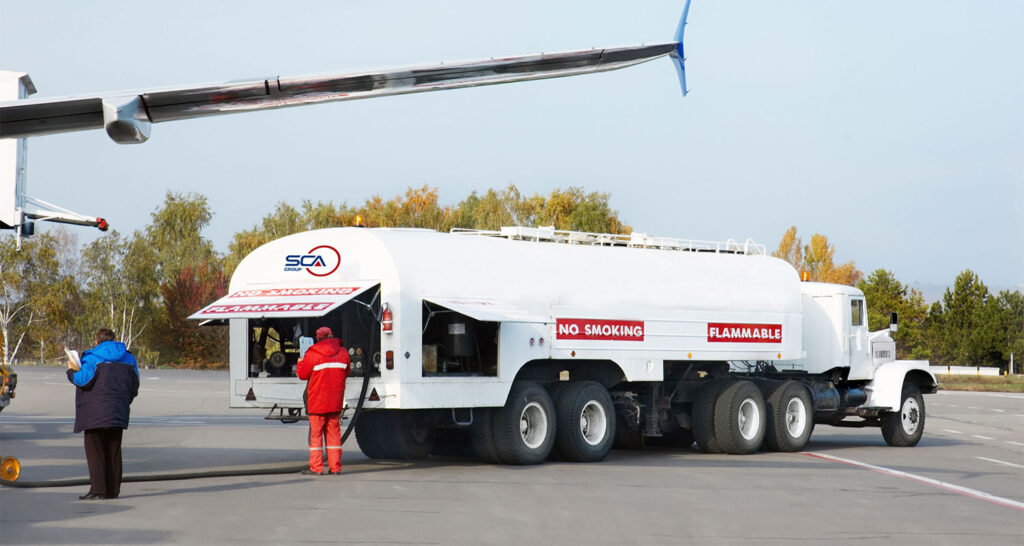
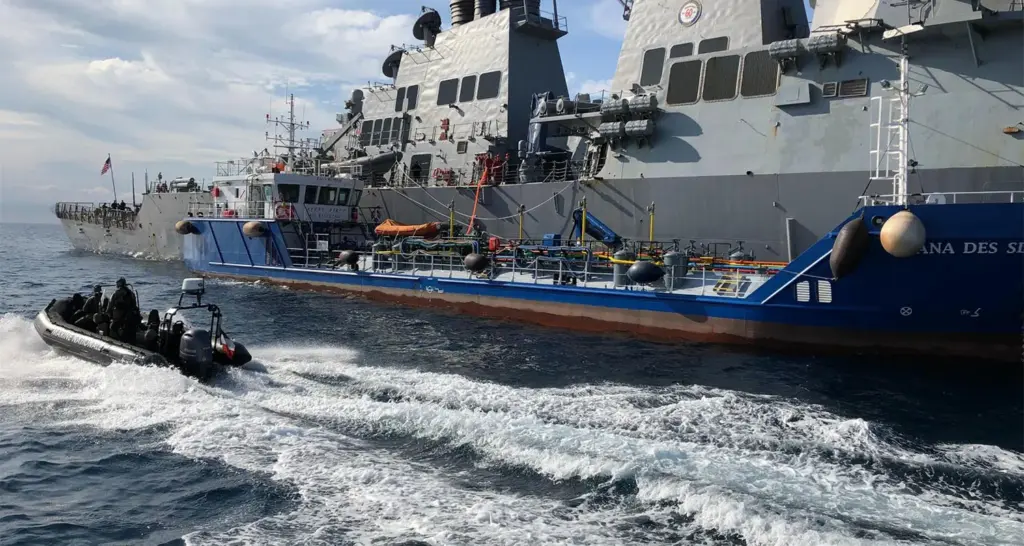
In Marine Fuel Supply, risk may arise during bunkering, barge transfer, tank interface or sample handling. In Aviation Fuel Supply, risk may relate to specification control, filtration, water detection, additive management or into-plane delivery procedures. In Ground Fuel Supply, risk may occur through contaminated tanks, road delivery, poor segregation or inadequate site-level handling.
These risks do not apply uniformly across every Fuel Supply environment. The operational differences between Marine, Aviation and Ground Fuel procurement determine which specifications, handling controls, documentation requirements and acceptance checks must be prioritised for each delivery.
The quality control process must therefore follow the fuel across the delivery route, not only at the final point of receipt.
Testing Priorities in Defence Fuel Supply
Fuel testing should be treated as a layered assurance process. No single check is enough on its own. Testing should combine visual inspection, representative sampling, field-level checks, documentation review and laboratory confirmation where required.
Visual Inspection and Appearance Checks
Visual inspection is often the first warning point. Fuel may be checked for visible water, haze, cloudiness, sediment, unusual colour or other signs of contamination.
A clear visual appearance does not prove full specification compliance, but it can identify obvious quality problems before fuel is accepted into operational storage or equipment.
Water, Sediment and Particulate Control
Water and sediment are among the most important quality risks in operational fuel supply. Water can support microbial growth, create corrosion risk and affect fuel system performance. Sediment and particulate matter can block filters, damage components and increase maintenance burden.
In aviation environments, contamination control is particularly sensitive because fuel quality issues can directly affect aircraft safety and availability. In maritime and ground environments, contamination may also affect engines, generators, pumps and supporting equipment.
Representative Sampling
A sample is only useful if it accurately represents the fuel being delivered. Poor sampling can create false confidence or unnecessary rejection.
Representative sampling depends on the correct sampling point, suitable containers, controlled handling and clear labelling. It should also be supported by records that identify the batch, delivery source, time, location and responsible parties.
Field Testing and Laboratory Testing
Field testing can support immediate operational decisions, especially during delivery or receipt. Laboratory testing provides deeper confirmation when specifications, disputes, contamination concerns or contractual requirements demand more detailed analysis.
The correct balance depends on the fuel type, operating environment, urgency, risk level and acceptance requirements.
Documentation and Traceability in Fuel Quality Control
Fuel quality must be proven, not assumed. Documentation gives receiving teams, procurement teams and operational authorities a traceable basis for acceptance.
Important documentation may include:
- Certificate of Analysis;
- Certificate of Conformity;
- Bunker Delivery Note;
- Delivery receipt;
- Batch or lot identification;
- Retained sample records;
- Test results;
- Supplier declaration;
- Chain of custody records;
- Quantity reconciliation;
- Non-conforming product report;
- Rejection or dispute records.
For Marine Fuel Supply, the Bunker Delivery Note is a key document because it records the delivery details and supports later reconciliation or dispute handling. For Aviation Fuel Supply, specification records, quality certificates and handling records are critical because aviation fuel acceptance relies on strict technical control. For Ground Fuel Supply, delivery notes, tank records and batch traceability help confirm that the correct product has been delivered to the correct location.
Without documentation, even suitable fuel can create procurement and operational uncertainty.
Delivery Assurance Across Marine, Aviation and Ground Fuel Supply
Delivery assurance means confirming that the right fuel has been delivered, in the right condition, with the right documentation, through an acceptable process.
Marine Fuel Supply
In Marine Fuel Supply, delivery assurance often centres on bunkering control, supplier coordination, quantity reconciliation, retained samples and Bunker Delivery Notes.
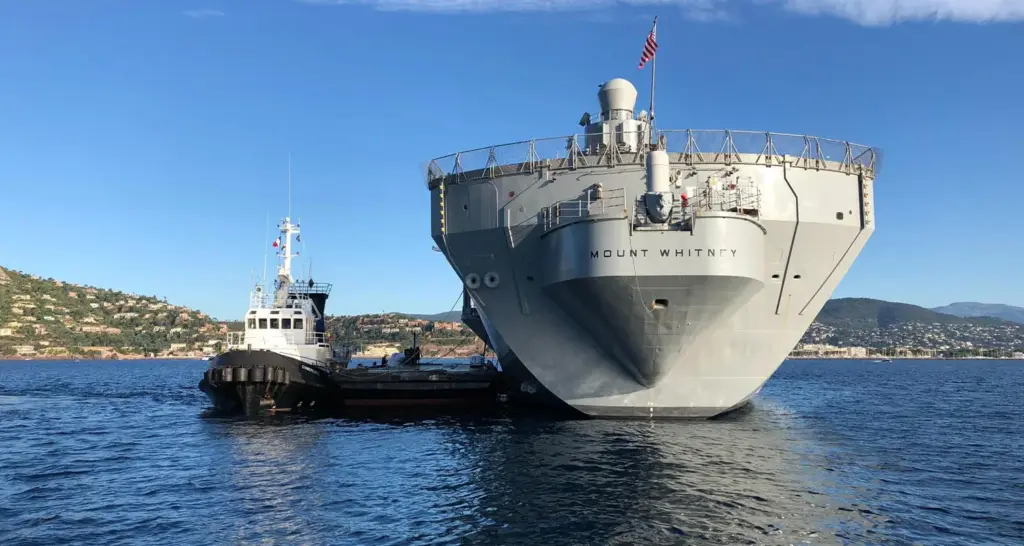
For naval and maritime operations, F-76 Fuel Supply, MGO Supply, Marine Bunker Services and Global Marine Fuel Supply require close coordination between suppliers, vessels, port authorities and operational teams. A delayed or disputed bunker delivery can affect sailing windows, port schedules and mission planning.
Quality assurance should therefore begin before the vessel receives fuel. Procurement teams should confirm the fuel grade, delivery method, testing expectations, documentation requirements and escalation route before bunkering begins.
Aviation Fuel Supply
In Aviation Fuel Supply, fuel quality control is highly sensitive because aviation systems depend on strict specification, cleanliness and handling procedures.
JET A-1 Fuel Supply, F-44 (JP-5) Fuel Supply and Military Aviation Fuel Supply require clear specification control, water management, filtration discipline and reliable documentation. The acceptance process must account for the fuel source, storage condition, transfer route and delivery method.
Any uncertainty around grade, documentation or contamination should be resolved before the fuel is used for aircraft operations.
Ground Fuel Supply
Ground Fuel Supply supports vehicles, generators, installations, temporary sites and inland operating areas. It may involve diesel, gasoline or other operational fuels delivered to posts, camps, stations, depots or mission locations.
Quality control in this environment depends on supplier reliability, tank condition, delivery verification, segregation and basic contamination checks. Even where the fuel is less technically sensitive than aviation fuel, poor control can still affect generators, tactical vehicles, support equipment and operational continuity.
What Happens When Fuel Does Not Meet Requirements?
When fuel is suspected to be contaminated, incorrectly specified or poorly documented, it should not be accepted casually. The response must be controlled.
A typical process may include:
- Delaying, pausing or stopping transfer.
- Isolating or segregating the product.
- Retaining samples.
- Reviewing supplier documentation.
- Notifying the relevant quality, procurement or operational authority.
- Requesting further testing where required.
- Recording the non-conformance.
- Rejecting, regrading, recovering or disposing of the product under authorised procedures.
The key principle is simple: Non-conforming fuel should not enter operational use until its status is clear and the responsible authority has approved the next step.
This protects the receiving organisation from avoidable technical, contractual and safety risk.
How QSHE Supports Fuel Quality Control
Fuel quality is closely connected to Quality, Safety, Health and Environmental governance. The technical condition of fuel is only one part of the process. Teams must also manage safe transfer, spill prevention, environmental protection, documentation control, contractor oversight and incident response.
A strong QSHE framework helps ensure that fuel handling and delivery activities are controlled, documented and aligned with operational risk management.
This matters because fuel supply involves hazardous materials, mobile equipment, multiple contractors and time-sensitive delivery conditions. Without clear procedures, even routine delivery activity can create unnecessary exposure.
Relevant Certifications also support institutional confidence by demonstrating that quality and management systems are governed through recognised standards rather than informal practice.
Environmental and ESG Considerations in Fuel Quality Control
Fuel quality control also has an environmental dimension. Poor fuel handling can increase the risk of spills, waste, rework, disposal requirements and unnecessary emissions linked to repeated delivery or rejected product.
As maritime fuel regulation develops, documentation and compliance expectations are becoming more important. The European Commission states that the FuelEU Maritime framework promotes the use of renewable and low-carbon fuels and clean energy technologies for ships, adding a further compliance context for maritime operators and suppliers. (Mobility and Transport)
For defence and maritime logistics teams, this does not remove the need for traditional fuel quality assurance. It increases the need for disciplined specification control, traceability and documentation, especially where alternative or lower-carbon fuels are being introduced into operational supply chains.
This connects directly with broader Climate Action and ESG priorities. Responsible fuel logistics is not only about sourcing fuel. It is also about controlling quality, reducing waste, preventing avoidable environmental harm and maintaining auditable records.
Why Global Delivery Assurance Depends on Network Coordination
Fuel quality control becomes more complex when supply is delivered across different ports, airfields, regions and operating environments.
A global delivery model may involve different local suppliers, documentation standards, regulatory environments, testing capabilities and storage conditions. Procurement teams may define the requirement centrally, while actual delivery is executed through local assets and suppliers.
This is where coordinated network control becomes important. A reliable Global Network supports supplier identification, delivery coordination, local liaison, documentation follow-up and issue escalation across operating locations.
In practical terms, delivery assurance depends on connecting three things:
- The procurement requirement;
- The local delivery process;
- The acceptance evidence.
If any of these are weak, the receiving organisation may face uncertainty at the point where certainty matters most.
Procurement Priorities for Fuel Quality Control
Procurement teams should treat fuel quality requirements as part of the original purchase requirement, not as an issue to resolve after delivery.
Key priorities include:
- Define the required fuel grade clearly;
- Specify applicable standards and documentation expectations;
- Confirm whether field testing or laboratory testing is required;
- Identify retained sample requirements;
- Define delivery and custody transfer points;
- Confirm supplier capability before delivery;
- Require Certificates of Analysis or Certificates of Conformity where applicable;
- Verify Bunker Delivery Note requirements for marine deliveries;
- Confirm quantity reconciliation procedures;
- Agree escalation routes for off-specification fuel;
- Record acceptance or rejection decisions clearly.
This approach reduces ambiguity. It also gives receiving teams a practical basis for checking whether the delivery meets the operational and contractual requirement.
Fuel Quality Control as A Readiness Function
Fuel quality control should be viewed as a readiness function. It protects operational platforms, reduces preventable disruption and supports accountable procurement.
In Defence Logistics Support, the quality of fuel can affect whether vessels sail on time, aircraft remain available, vehicles operate reliably and mission-support systems continue functioning. Delivery assurance therefore sits at the intersection of operations, procurement, quality control, safety and compliance.
The strongest fuel supply systems do not wait until a problem occurs. They define requirements early, control suppliers, verify documentation, test where required and establish clear procedures for non-conforming product.
FAQ
What Is Fuel Quality Control in Defence Logistics?
Fuel Quality Control is the process of inspecting, sampling, testing, documenting and accepting fuel before it is used in defence, maritime, aviation or ground operations.
Why is Fuel Testing Important Before Delivery Acceptance?
Fuel testing helps confirm that the product meets the required grade, specification and cleanliness expectations before it enters operational storage, vessels, aircraft, vehicles or support systems.
What Documents are Important in Fuel Quality Control?
Important documents may include Certificates of Analysis, Certificates of Conformity, Bunker Delivery Notes, batch records, retained sample records, delivery receipts, chain of custody records and test results.
What Happens if Fuel is Contaminated or Off-Specification?
The fuel should be isolated or rejected according to the applicable procedure. Samples should be retained, documentation reviewed, relevant authorities notified and further testing completed where required.
How Does Fuel Quality Control Support Defence Logistics Support?
Fuel Quality Control supports Defence Logistics Support by ensuring that fuel is safe, compliant, traceable and suitable for use. This reduces operational delay, equipment risk, safety exposure and procurement uncertainty.
Conclusion
Fuel Quality Control is a core part of Fuel Supply Logistics because fuel must be suitable before it is accepted for operational use. Availability alone is not enough. Defence, maritime, aviation and ground operations depend on fuel that is correctly specified, clean, traceable, documented and supported by controlled acceptance procedures.
For institutional buyers and logistics planners, delivery assurance reduces uncertainty. It helps protect equipment, maintain readiness, support compliance and create a reliable audit trail across the supply chain.
In defence environments, fuel supply is not complete when the product arrives. It is complete when the fuel has been verified, documented, accepted and made safe for operational use.